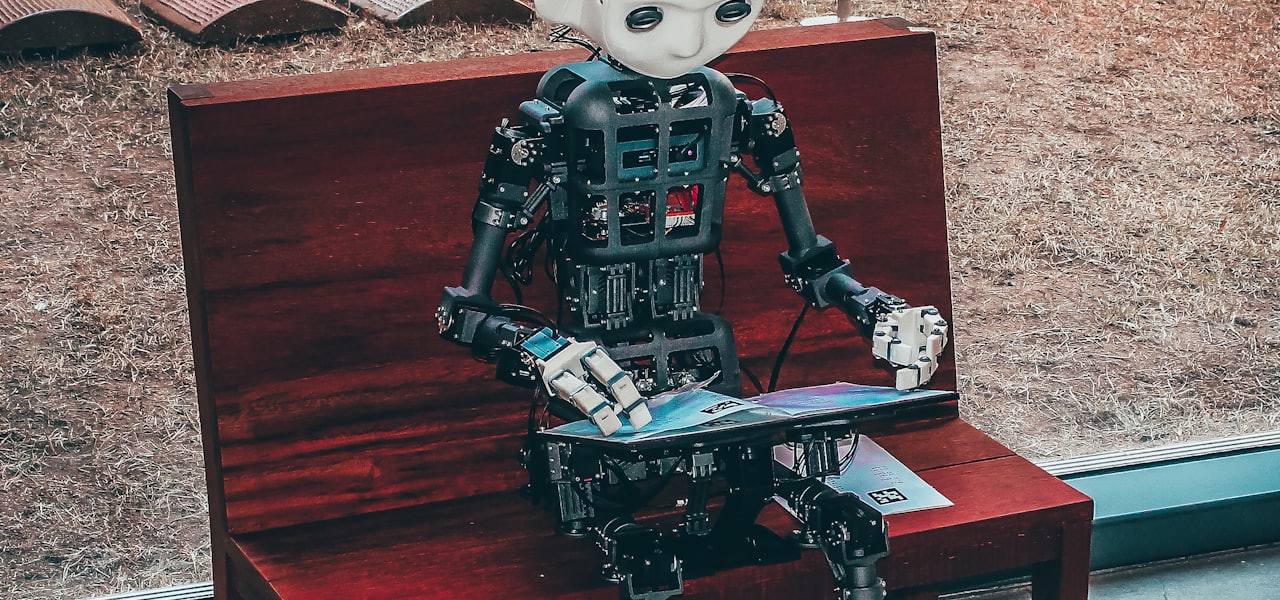
Meta-learning is a subfield of machine learning where automatic learning algorithms are applied to metadata about machine learning experiments. As of 2017, the term had not found a standard interpretation, however the main goal is to use such metadata to understand how automatic learning can become flexible in solving learning problems, hence to improve the performance of existing learning algorithms or to learn (induce) the learning algorithm itself, hence the alternative term learning to learn. Flexibility is important because each learning algorithm is based on a set of assumptions about the data, its inductive bias. This means that it will only learn well if the bias matches the learning problem. A learning algorithm may perform very well in one domain, but not on the next. This poses strong restrictions on the use of machine learning or data mining techniques, since the relationship between the learning problem (often some kind of database) and the effectiveness of different learning algorithms is not yet understood. By using different kinds of metadata, like properties of the learning problem, algorithm properties (like performance measures), or patterns previously derived from the data, it is possible to learn, select, alter or combine different learning algorithms to effectively solve a given learning problem. Critiques of meta-learning approaches bear a strong resemblance to the critique of metaheuristic, a possibly related problem. A good analogy to meta-learning, and the inspiration for Jürgen Schmidhuber's early work (1987) and Yoshua Bengio et al.'s work (1991), considers that genetic evolution learns the learning procedure encoded in genes and executed in each individual's brain. In an open-ended hierarchical meta-learning system using genetic programming, better evolutionary methods can be learned by meta evolution, which itself can be improved by meta meta evolution, etc. == Definition == A proposed definition for a meta-learning system combines three requirements: The system must include a learning subsystem. Experience is gained by exploiting meta knowledge extracted in a previous learning episode on a single dataset, or from different domains. Learning bias must be chosen dynamically. Bias refers to the assumptions that influence the choice of explanatory hypotheses and not the notion of bias represented in the bias-variance dilemma. Meta-learning is concerned with two aspects of learning bias. Declarative bias specifies the representation of the space of hypotheses, and affects the size of the search space (e.g., represent hypotheses using linear functions only). Procedural bias imposes constraints on the ordering of the inductive hypotheses (e.g., preferring smaller hypotheses). == Common approaches == There are three common approaches: using (cyclic) networks with external or internal memory (model-based) learning effective distance metrics (metrics-based) explicitly optimizing model parameters for fast learning (optimization-based). === Model-Based === Model-based meta-learning models updates its parameters rapidly with a few training steps, which can be achieved by its internal architecture or controlled by another meta-learner model. ==== Memory-Augmented Neural Networks ==== A Memory-Augmented Neural Network, or MANN for short, is claimed to be able to encode new information quickly and thus to adapt to new tasks after only a few examples. ==== Meta Networks ==== Meta Networks (MetaNet) learns a meta-level knowledge across tasks and shifts its inductive biases via fast parameterization for rapid generalization. === Metric-Based === The core idea in metric-based meta-learning is similar to nearest neighbors algorithms, which weight is generated by a kernel function. It aims to learn a metric or distance function over objects. The notion of a good metric is problem-dependent. It should represent the relationship between inputs in the task space and facilitate problem solving. ==== Convolutional Siamese Neural Network ==== Siamese neural network is composed of two twin networks whose output is jointly trained. There is a function above to learn the relationship between input data sample pairs. The two networks are the same, sharing the same weight and network parameters. ==== Matching Networks ==== Matching Networks learn a network that maps a small labelled support set and an unlabelled example to its label, obviating the need for fine-tuning to adapt to new class types. ==== Relation Network ==== The Relation Network (RN), is trained end-to-end from scratch. During meta-learning, it learns to learn a deep distance metric to compare a small number of images within episodes, each of which is designed to simulate the few-shot setting. ==== Prototypical Networks ==== Prototypical Networks learn a metric space in which classification can be performed by computing distances to prototype representations of each class. Compared to recent approaches for few-shot learning, they reflect a simpler inductive bias that is beneficial in this limited-data regime, and achieve satisfied results. === Optimization-Based === What optimization-based meta-learning algorithms intend for is to adjust the optimization algorithm so that the model can be good at learning with a few examples. ==== LSTM Meta-Learner ==== LSTM-based meta-learner is to learn the exact optimization algorithm used to train another learner neural network classifier in the few-shot regime. The parametrization allows it to learn appropriate parameter updates specifically for the scenario where a set amount of updates will be made, while also learning a general initialization of the learner (classifier) network that allows for quick convergence of training. ==== Temporal Discreteness ==== Model-Agnostic Meta-Learning (MAML) is a fairly general optimization algorithm, compatible with any model that learns through gradient descent. ==== Reptile ==== Reptile is a remarkably simple meta-learning optimization algorithm, given that both of its components rely on meta-optimization through gradient descent and both are model-agnostic. == Examples == Some approaches which have been viewed as instances of meta-learning: Recurrent neural networks (RNNs) are universal computers. In 1993, Jürgen Schmidhuber showed how "self-referential" RNNs can in principle learn by backpropagation to run their own weight change algorithm, which may be quite different from backpropagation. In 2001, Sepp Hochreiter & A.S. Younger & P.R. Conwell built a successful supervised meta-learner based on Long short-term memory RNNs. It learned through backpropagation a learning algorithm for quadratic functions that is much faster than backpropagation. Researchers at Deepmind (Marcin Andrychowicz et al.) extended this approach to optimization in 2017. In the 1990s, Meta Reinforcement Learning or Meta RL was achieved in Schmidhuber's research group through self-modifying policies written in a universal programming language that contains special instructions for changing the policy itself. There is a single lifelong trial. The goal of the RL agent is to maximize reward. It learns to accelerate reward intake by continually improving its own learning algorithm which is part of the "self-referential" policy. An extreme type of Meta Reinforcement Learning is embodied by the Gödel machine, a theoretical construct which can inspect and modify any part of its own software which also contains a general theorem prover. It can achieve recursive self-improvement in a provably optimal way. Model-Agnostic Meta-Learning (MAML) was introduced in 2017 by Chelsea Finn et al. Given a sequence of tasks, the parameters of a given model are trained such that few iterations of gradient descent with few training data from a new task will lead to good generalization performance on that task. MAML "trains the model to be easy to fine-tune." MAML was successfully applied to few-shot image classification benchmarks and to policy-gradient-based reinforcement learning. Variational Bayes-Adaptive Deep RL (VariBAD) was introduced in 2019. While MAML is optimization-based, VariBAD is a model-based method for meta reinforcement learning, and leverages a variational autoencoder to capture the task information in an internal memory, thus conditioning its decision making on the task. When addressing a set of tasks, most meta learning approaches optimize the average score across all tasks. Hence, certain tasks may be sacrificed in favor of the average score, which is often unacceptable in real-world applications. By contrast, Robust Meta Reinforcement Learning (RoML) focuses on improving low-score tasks, increasing robustness to the selection of task. RoML works as a meta-algorithm, as it can be applied on top of other meta learning algorithms (such as MAML and VariBAD) to increase their robustness. It is applicable to both supervised meta learning and meta reinforcement learning. Discovering meta-knowledge works by inducing knowledge
Autonomous things
Autonomous things, abbreviated AuT, or the Internet of autonomous things, abbreviated as IoAT, is an emerging term for the technological developments that are expected to bring computers into the physical environment as autonomous entities without human direction, freely moving and interacting with humans and other objects. Self-navigating drones are the first AuT technology in (limited) deployment. It is expected that the first mass-deployment of AuT technologies will be the autonomous car, generally expected to be available around 2020. Other currently expected AuT technologies include home robotics (e.g., machines that provide care for the elderly, infirm or young), and military robots (air, land or sea autonomous machines with information-collection or target-attack capabilities). AuT technologies share many common traits, which justify the common notation. They are all based on recent breakthroughs in the domains of (deep) machine learning and artificial intelligence. They all require extensive and prompt regulatory developments to specify the requirements from them and to license and manage their deployment (see the further reading below). And they all require unprecedented levels of safety (e.g., automobile safety) and security, to overcome concerns about the potential negative impact of the new technology. As an example, the autonomous car both addresses the main existing safety issues and creates new issues. It is expected to be much safer than existing vehicles, by eliminating the single most dangerous element – the driver. The US's National Highway Traffic Safety Administration estimates 94 percent of US accidents were the result of human error and poor decision-making, including speeding and impaired driving, and the Center for Internet and Society at Stanford Law School claims that "Some ninety percent of motor vehicle crashes are caused at least in part by human error". So while safety standards like the ISO 26262 specify the required safety, there is still a burden on the industry to demonstrate acceptable safety. While car accidents claim every year 35,000 lives in the US, and 1.25 million worldwide, some believe that even "a car that's 10 times as safe, which means 3,500 people die on the roads each year [in the US alone]" would not be accepted by the public. The acceptable level may be closer to the current figures on aviation accidents and incidents, with under a thousand worldwide deaths in most years – three orders of magnitude lower than cars. This underscores the unprecedented nature of the safety requirements that will need to be met for cars, with similar levels of safety expected for other Autonomous Things.
Kai's Power Tools
Kai's Power Tools (KPT) are a set of API plugins created by the German computer scientist Kai Krause in 1992 that were designed for use with Adobe Photoshop and Corel Photo-Paint. Kai's Power Tools were sold to Corel in 2000 when MetaCreations was closed. There are various versions of Kai's Power Tools. KPT 3, 5, 6, and X sets are compilations of different filters. The program interface features a reward-based function in which a bonus function is revealed as the user moves towards more complex aspects of the tool. == Filters == The KPT Convolver is a mathematics based filter; the level of precision and varying effects can be achieved by using numerical values of colour, tint, hue, saturation, contrast, brightness, luminosity, and posterize. The KPT Projector takes the current image or selection and offers a number of interactive perspective warp effects. To a large extent, with its draggable distortion handles and its moving, scaling and rotating options, this simply duplicates Adobe Photoshop's Free Transform capabilities. What is completely different is the ability to rotate the bitmap image in 3D space and to tile the results if desired. It can also animate the distortions by dragging keyframes from the preview window into an animation palette. KPT 6 will then preview the animation and output it to various sizes in avi or mov format. This animation capability is even more useful with the KPT Turbulence filter. This is another distortion filter, but one that treats the image as if it was completely liquid. The preview panel shows the animation in real time. The KPT Goo filter is used to produce a single frame freeform liquid distortion. This filter is available both with KPT 6 and the standalone version. It works by effectively turning a bitmap image into a liquid that can be interactively smeared, smudged, twirled, and pinched with the range of tools on offer. The obvious use is to distort photographic portraits into caricatures. KPT Materializer can create advanced surface textures based on bump maps that define troughs and peaks. It can use any external image for the basis of the bump map or alternatively the user can pick out the hue, saturation, luminance or red, green, or blue channel of the current image. It can then offset, scale and rotate the texture map, control its lighting, and even blend in a reflection map. The filter can be used for anything from providing an oil-painting feel to an entire image, to giving the illusion of depth to a selection. Also producing the impression of depth is the KPT Gel filter which uses various paint tools to synthesize photo-realistic 3D materials such as metals, liquids, or plastics. Gel painting is very different from traditional 2D painting as the brush strokes pool together when they touch and refract the underlying image. It can also manipulate 3D paint—once it has been added—by twirling, pinching, and carving it. The opposite is true of the Equalizer filter, which is used for applying variations on sharpening effects. The filter has three modes. The first mode, Equalizer, looks and works rather like the graphic equalizer on a stereo system, enabling adjustment of the level of pixel contrast within nine bands of different visual frequencies. The second mode, Contrast Sharpen, allows for increasing the contrast between light and dark areas in an image. The third mode, Bounded Sharpen, can sharpen an image without causing oversharpening, which can lead to halo effects. This feature is particularly useful when pulling out the detail in an image softened by resizing. KPT SceneBuilder is used for producing photorealistic 3D scenes by importing and rendering 3DS files. The main image window offers three tabs for editing in 2D and 3D mode and for setting up the object's final texture. Many users regard this filter as being the most impressive because it acts as a standalone 3D rendering tool and provides control over everything from transparency, reflection, refraction, bump mapping through to multiple light sources, and so on but without the ability to create or edit objects. The final filter, KPT SkyEffects, also has its roots in Metacreations' experience with 3D programs such as Bryce and RayDream. This filter is designed to simulate the interaction between the light from the sun or moon with no less than six atmospheric layers of haze, fog and cloud. The filter is typical of the KPT 6 collection as a whole: at times the interface is inspired and offers the ability to create beautiful reddening sunsets simply by interactively dragging the sun toward the horizon, producing realistic sunsets and moonscapes. == Other effects == Kai's Power Tools 6 features a lens flare effect for precisely managing the type of glow, halo, streaks, and reflection. The addition of a library of preset effects helps to overcome this by allowing the user to choose a standard effect and then interactively position the flare in the image preview. KPT 6 provides a new engine in the form of the KPT Reaction, which takes a reaction seed and turns it into a seamlessly tiling pattern based on a reaction diffusion process. It offers random noise, regular dots or reticulated voronoi patterns or a bitmap image itself as the seed. Corel has no plans for any updates.
Necrobotics
Necrobotics is the practice of using biotic materials (or dead organisms) as robotic components. Necrobotics can serve as an alternative to mechanical components that are difficult to manufacture by using biological components designed by natural selection in order to exploit the highly developed selective design implemented in biological lifeforms via the process of evolution. In July 2022, researchers in the Preston Innovation Lab at Rice University in Houston, Texas published a paper in Advanced Science introducing the concept and demonstrating its capability by repurposing dead spiders as robotic grippers and applying pressurized air to activate their gripping arms. In April 2025 researchers at Shinshu University created a “bio-hybrid drone” using silk-worm moth antennae to detect the source of a smell. In November 2025 researchers at McGill University demonstrated the use of a mosquito proboscis as a fine nozzle in experimental 3D printing. Necrobotics utilizes the spider's organic hydraulic system and their compact legs to create an efficient and simple gripper system. The necrobotic spider gripper is capable of lifting small and light objects, thereby serving as an alternative to complex and costly small mechanical grippers. == Background == The main appeal of the spider's body in necrobotics is its compact leg mechanism and use of hydraulic pressure. The spider's anatomy utilizes a simple hydraulic (fluid) pressure system. Spider legs have flexor muscles that naturally constrict their legs when relaxed. A force is required to straighten and extend their legs, which spiders accomplish by pumping hemolymph fluid (blood) through their joints as a means of hydraulic pressure. It takes no external power to curl their legs due to their flexor muscles' natural curled state. In July 2022, researchers in the Preston Innovation Lab at Rice University published a paper detailing their experiments with the gripper. Although dead spiders no longer produce hemolymph, Te Faye Yap (lead author and mechanical engineering graduate) found that pumping air through a needle into the spider's cephalothorax (main body) accomplishes the same results as hemolymph. The original hydraulic (fluid) system is essentially converted into a pneumatic (air) system. == Fabrication == Obtain a spider Euthanize the spider using a cold temperature of around -4°C for 5-7 days Insert a 25 gauge hypodermic needle into the spider's cephalothorax (main body) Apply glue around the needle to form a seal and allow it to dry Connect a syringe or pump to the needle Extend the spider's legs by pumping air in == Testing and Data == === Internal Force Versus Gripping Force === The typical pressure in a resting spider's legs ranges from 4 kPa to 6.1 kPa. Researchers extended the legs by increasing the spider's internal pressure to 5.5 kPa. Pumping air into the body increases the internal pressure, causing the legs to expand. Pumping air out of the body decreases internal pressure, causing the legs to contract due to their flexor leg muscles. When the internal pressure decreases to 0 kPa, the gripper would be fully closed, allowing for the gripper to grasp objects. This action demonstrates that as internal pressure decreases, the gripping force increases. Inversely, when internal pressure increases, the gripping force decreases. By gripping individual weighted acetate beads, it is found that the necrobotic gripper achieves a maximum gripping force of 0.35 milinewtons. === Spider Weight Versus Gripping Force === To estimate the gripping forces of smaller and larger spiders, researchers created a plot to predict the gripping force relative to the size of the spider. The wolf spider's body weight is relatively equal to the gripping force of its legs. The mass of the gripper is 33.5 mg and can lift 1.3 times its body weight (43.6 mg or 0.35 mN). However, with larger spiders, the gripping force relative to body weight decreases. For example, a 200-gram goliath birdeater is predicted to lift 10% of its weight (20 grams or 196 mN). Though there is an inverse relationship between spider mass and gripping force, larger spiders exert greater gripping forces than smaller spiders. === Gripper Lifespan === The necrobotic gripper's functionality is entirely reliant on the structural integrity of the spider. If the spider were to break down easily and frequently, the gripper would not be practical. Using cyclic testing, a series of repeated actions, it is found that the necrobotic gripper can actuate 700 to 1000 times. After 1000 cycles, cracks begin forming on the membrane of the leg joints due to dehydration. Weakened and decomposing joints lead to frequent breakage and replacement, thereby serving as an obstacle in applying necrobotics to real-world scenarios. One theorized fix to this issue is applying beeswax or a lubricant to the joints. Researchers found that over 10 days, the mass of an uncoated spider decreased 17 times more than the mass of a spider coated with beeswax. Lubricating joints combats dehydration and slows the loss of organic material. == Constraints == With the usage of organic material, there is a higher chance of the component decomposing and breaking down as opposed to traditional mechanical systems. There may be additional work and management required to replace these grippers if they fail. Additionally, organic inconsistencies with the spiders will yield inaccurate results. Not all wolf spiders develop the same, so gripping force and leg contraction can vary between grippers. There are moral implications behind euthanizing spiders for robotics. The ethical boundaries that necrobotics push in the pursuit of biohybrid systems raise concerns, as opponents say it may lead to the hybridization of mammals and is intrusive to nature. Proponents respond that repurposing dead animals has been human practice for millennia and that necrobotics should be pursued to advance science.
Smoothing
In statistics and image processing, to smooth a data set is to create an approximating function that attempts to capture important patterns in the data, while leaving out noise or other fine-scale structures/rapid phenomena. In smoothing, the data points of a signal are modified so individual points higher than the adjacent points (presumably because of noise) are reduced, and points that are lower than the adjacent points are increased, leading to a smoother signal. Reducing noise by smoothing may aid in data analysis in two notable ways: Help uncover more meaningful information from the underlying data, such as trends. Provide analyses that are both flexible and robust. Many different algorithms are used in smoothing, most commonly binning, kernels, and local weighted regression. == Compared to curve fitting == Smoothing may be distinguished from the related and partially overlapping concept of curve fitting in the following ways: curve fitting often involves the use of an explicit function form for the result, whereas the immediate results from smoothing are the "smoothed" values with no later use made of a functional form if there is one; the aim of smoothing is to give a general idea of relatively slow changes of value with little attention paid to the close matching of data values, while curve fitting concentrates on achieving as close a match as possible. smoothing methods often have an associated tuning parameter which is used to control the extent of smoothing. Curve fitting will adjust any number of parameters of the function to obtain the 'best' fit. == Linear smoothers == In the case that the smoothed values can be written as a linear transformation of the observed values, the smoothing operation is known as a linear smoother; the matrix representing the transformation is known as a smoother matrix or hat matrix. The operation of applying such a matrix transformation is called convolution. Thus the matrix is also called convolution matrix or a convolution kernel. In the case of simple series of data points (rather than a multi-dimensional image), the convolution kernel is a one-dimensional vector. == Algorithms == One of the most common algorithms is the "moving average", often used to try to capture important trends in repeated statistical surveys. In image processing and computer vision, smoothing ideas are used in scale space representations. The simplest smoothing algorithm is the "rectangular" or "unweighted sliding-average smooth". This method replaces each point in the signal with the average of "m" adjacent points, where "m" is a positive integer called the "smooth width". Usually m is an odd number. The triangular smooth is like the rectangular smooth except that it implements a weighted smoothing function. Some specific smoothing and filter types, with their respective uses, pros and cons are:
Time series
In mathematics, a time series is a sequence of data points indexed, listed, or graphed in chronological order. Most commonly, a time series consists of observations recorded at successive equally spaced points in time. Thus, it represents a form of discrete-time data. A time series may describe measurements collected over seconds, days, years, or even centuries. Common examples include heights of ocean tides, counts of sunspots, daily temperature readings, and the closing values of stock market indices such as the Dow Jones Industrial Average. A time series is often visualized using a run chart (a type of temporal line chart), which helps identify patterns such as trends, seasonal effects, and irregular fluctuations. Time series are widely used in statistics, actuarial science, signal processing, pattern recognition, econometrics, mathematical finance, weather forecasting, earthquake prediction, electroencephalography, control engineering, astronomy, communications engineering, and many other areas of applied science and engineering that involve temporal measurements. Time series analysis comprises methods for analyzing time series data in order to extract meaningful statistics and other characteristics of the data. Time series forecasting is the use of a model to predict future values based on previously observed values. Generally, time series data is modeled as a stochastic process. While regression analysis is often employed in such a way as to test relationships between one or more different time series, this type of analysis is not usually called "time series analysis", which refers in particular to relationships between different points in time within a single series. Time series data have a natural temporal ordering. This makes time series analysis distinct from cross-sectional studies, in which there is no natural ordering of the observations (e.g. explaining people's wages by reference to their respective education levels, where the individuals' data could be entered in any order). Time series analysis is also distinct from spatial data analysis where the observations typically relate to geographical locations (e.g. accounting for house prices by the location as well as the intrinsic characteristics of the houses). A stochastic model for a time series will generally reflect the fact that observations close together in time will be more closely related than observations further apart. In addition, time series models will often make use of the natural one-way ordering of time so that values for a given period will be expressed as deriving in some way from past values, rather than from future values (see time reversibility). Time series analysis can be applied to real-valued, continuous data, discrete numeric data, or discrete symbolic data (i.e. sequences of characters, such as letters and words in the English language). == Methods for analysis == Methods for time series analysis may be divided into two classes: frequency-domain methods and time-domain methods. The former include spectral analysis and wavelet analysis; the latter include auto-correlation and cross-correlation analysis. In the time domain, correlation and analysis can be made in a filter-like manner using scaled correlation, thereby mitigating the need to operate in the frequency domain. Additionally, time series analysis techniques may be divided into parametric and non-parametric methods. The parametric approaches assume that the underlying stationary stochastic process has a certain structure which can be described using a small number of parameters (for example, using an autoregressive or moving-average model). In these approaches, the task is to estimate the parameters of the model that describes the stochastic process. By contrast, non-parametric approaches explicitly estimate the covariance or the spectrum of the process without assuming that the process has any particular structure. Methods of time series analysis may also be divided into linear and non-linear, and univariate and multivariate. == Panel data == A time series is one type of panel data. Panel data is the general class, a multidimensional data set, whereas a time series data set is a one-dimensional panel (as is a cross-sectional dataset). A data set may exhibit characteristics of both panel data and time series data. One way to tell is to ask what makes one data record unique from the other records. If the answer is the time data field, then this is a time series data set candidate. If determining a unique record requires a time data field and an additional identifier which is unrelated to time (e.g. student ID, stock symbol, country code), then it is panel data candidate. If the differentiation lies on the non-time identifier, then the data set is a cross-sectional data set candidate. == Analysis == There are several types of motivation and data analysis available for time series which are appropriate for different purposes. === Motivation === In the context of statistics, econometrics, quantitative finance, seismology, meteorology, and geophysics the primary goal of time series analysis is forecasting. In the context of signal processing, control engineering and communication engineering it is used for signal detection. Other applications are in data mining, pattern recognition and machine learning, where time series analysis can be used for clustering, classification, query by content, anomaly detection as well as forecasting. === Exploratory analysis === A simple way to examine a regular time series is manually with a line chart. The datagraphic shows tuberculosis deaths in the United States, along with the yearly change and the percentage change from year to year. The total number of deaths declined in every year until the mid-1980s, after which there were occasional increases, often proportionately - but not absolutely - quite large. A study of corporate data analysts found two challenges to exploratory time series analysis: discovering the shape of interesting patterns, and finding an explanation for these patterns. Visual tools that represent time series data as heat map matrices can help overcome these challenges. === Estimation, filtering, and smoothing === This approach may be based on harmonic analysis and filtering of signals in the frequency domain using the Fourier transform, and spectral density estimation. Its development was significantly accelerated during World War II by mathematician Norbert Wiener, electrical engineers Rudolf E. Kálmán, Dennis Gabor and others for filtering signals from noise and predicting signal values at a certain point in time. An equivalent effect may be achieved in the time domain, as in a Kalman filter; see filtering and smoothing for more techniques. Other related techniques include: Autocorrelation analysis to examine serial dependence Spectral analysis to examine cyclic behavior which need not be related to seasonality. For example, sunspot activity varies over 11 year cycles. Other common examples include celestial phenomena, weather patterns, neural activity, commodity prices, and economic activity. Separation into components representing trend, seasonality, slow and fast variation, and cyclical irregularity: see trend estimation and decomposition of time series === Curve fitting === Curve fitting is the process of constructing a curve, or mathematical function, that has the best fit to a series of data points, possibly subject to constraints. Curve fitting can involve either interpolation, where an exact fit to the data is required, or smoothing, in which a "smooth" function is constructed that approximately fits the data. A related topic is regression analysis, which focuses more on questions of statistical inference such as how much uncertainty is present in a curve that is fit to data observed with random errors. Fitted curves can be used as an aid for data visualization, to infer values of a function where no data are available, and to summarize the relationships among two or more variables. Extrapolation refers to the use of a fitted curve beyond the range of the observed data, and is subject to a degree of uncertainty since it may reflect the method used to construct the curve as much as it reflects the observed data. For processes that are expected to generally grow in magnitude one of the curves in the graphic (and many others) can be fitted by estimating their parameters. The construction of economic time series involves the estimation of some components for some dates by interpolation between values ("benchmarks") for earlier and later dates. Interpolation is estimation of an unknown quantity between two known quantities (historical data), or drawing conclusions about missing information from the available information ("reading between the lines"). Interpolation is useful where the data surrounding the missing data is available and its trend, seasonality, and longer-term cycles are known. This is often done by using a relat
BeeSafe
BeeSafe is a personal safety mobile app launched in 2015 as a Slovak startup. It is a location-based security service that notifies family members and friends in case the user of the app gets in danger. The app has received numerous awards. The app has more than 700 downloads and 250 active logins from more than 60 countries worldwide. == History == BeeSafe was founded on March 20, 2015 by Peter Stražovec and Michal Kačerík. The project was a winner of Žilina’s Startup Weekend 2013 and a StartupAwards.SK 2015 finalist. Later on, the app was released in the Android and iOS marketplace. The whole BeeSafe project was in The Spot booster and incubator in Bratislava for three months. BeeSafe entered into an agreement with the city of Piešťany in November 2015 to increase the security of its citizen by connecting the mobile app with the police platform. It is the first city that started using the BeeSafe platform. Further on, the application tries to help people in other Slovak cities. The cities can see the users only if they are in danger. == Awards == BeeSafe app received the Via Bona award, it is a winner of a Slovak startup and has other nominations too.